The wine you buy in the supermarket is not the winegrower's wine
On a bottle of wine sold for €8 in the supermarket, the producer receives between €2 and €3. The rest? Around €2 for the merchant's margin, €1.50 for logistics and transport, €2 for the distributor's margin, and another €0.50 for shelf facing. Directly, the same winegrower earns €7 on a €8 bottle. Not because he's greedy - because the value chain is finally honest.
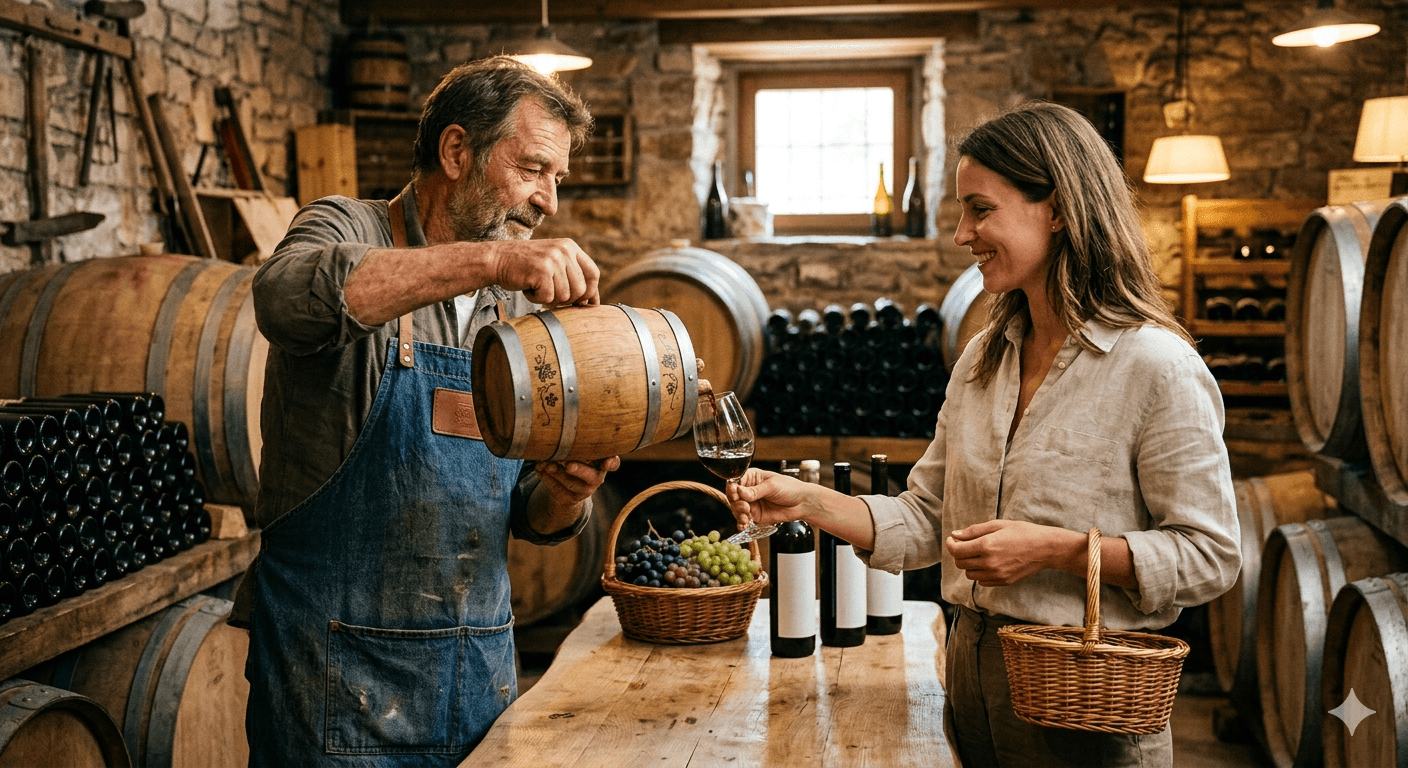
This is not some abstract economic theory. It's the reason why hundreds of winegrowers choose to sell their production themselves, even if it means spending hours on the phone, answering emails and packing boxes. Every bottle sold direct is a bottle that directly finances the work on the soil, the purchase of a new barrel, or the training of an apprentice.
You know exactly what you're drinking
When you order a wine on Spiravel, you read the history of the estate, you see photos of the vines and the cellar, you know the name of the winemaker, the exact grape variety, the winemaking method and the certifications in force. This level of transparency is impossible in supermarkets. A "Bordeaux" or "Vin de France" label tells you nothing about who grew the grapes, in what soil, or how they were vinified.
Each domain listed on Spiravel is checked by our team. It's not greenwashing or marketing - it's real traceability. You're not buying a brand. You're buying the work of a specific person, in a specific place, with specific choices.
Vintages not found elsewhere
Here's a well-kept secret in the wine industry: the best vintages from many estates never leave the estate outside direct sales. Micro-productions - parcels from 80-year-old vines, small batches vinified in a single half-muid, experimental cuvées - are reserved for customers who buy direct or for allocation lists. Traditional retailers will never see these bottles.
In direct allocation, some winemakers offer their wines even before bottling. You join a list, specify the quantity you want, and you receive the bottles as soon as they leave the cellar. This is the historic system of the great Bordeaux wines, extended to independent winegrowers. On Spiravel, you'll find exclusive vintages that you won't see at your wine shop or in restaurants.
Lower prices (yes, really)
The myth to deconstruct: "buying direct is expensive". The reality is exactly the opposite. A Languedoc sold for €12 direct from the estate costs between €18 and €22 in a wine shop, and €25 to €35 in a restaurant. The bottle is identical. Only the length of the commercial chain changes.
The winemaker earns more on each bottle, and you pay less. It's not magic - it's arithmetic. Take away a négociant (30% margin), a distributor (20%) and a retailer (40%), and you can see why direct wins on all counts. The only time direct wine costs more is when the winemaker has enough of a reputation to set his own prices - and in that case, you know it.
You're supporting the real economy
France has around 85,000 wine estates. The vast majority are family-run businesses of less than 10 hectares. For them, direct sales are not just another channel - they are often the key to their economic survival. Every order placed directly with the estate finances the cost of equipment, seasonal workers' wages, the upkeep of dry stone terraces or the conversion to organic farming.
The impact goes beyond the profit and loss account. Winegrowing maintains landscapes, preserves ecosystems and passes on know-how that can be measured in centuries. The Puy-de-Dôme, Corsica, the hillsides of Die and the terraced vineyards of Roussillon still exist because winegrowers work them. By buying direct, you are contributing to this real economy, not to the remuneration of a logistics shareholder.
How do you get started?
Three steps, ten minutes, and you'll never look at a supermarket shelf in the same way again.
Step one: explore the domains on Spiravel by region, grape variety or type of production - wines, champagnes, spirits. Each entry gives you the essential information: the history of the estate, certifications, available vintages.
Step two: read. Take two minutes to understand who this winemaker is, what he stands for and why he has chosen this atypical appellation or grape variety. This is the luxury that traditional wine shops never offer you - a direct relationship with the producer, from the very first order.
Third step: order. The delivery is meticulous, the bottles are packaged with the care they deserve, and shipped directly from the winery. And if you have a question about the wine you've just received, you can write directly to the winemaker. Try this with your supermarket.