No, fish doesn't automatically call for white wine. No, cheese doesn't need a tannic red. And no, your foie gras doesn't deserve that ice-cold Sauternes. The food-wine pairings we think we've mastered are often the ones we butcher most spectacularly. We repeat them like mantras without ever questioning the logic. The result: entire meals sabotaged by lazy reflexes. This article dissects five classic pairings that most amateurs — and even some sommeliers — consistently get wrong. For each, we pinpoint the exact mistake, explain why it persists, and offer a concrete, tested correction you can apply tonight. No vague theory. Just actionable knowledge. Because a great pairing isn't a rule learned by heart — it's understanding the interplay between acidity, fat, bitterness, and texture.
Mistakes #1 and #2: The Fish-White Autopilot and the Cheese-Red Stubbornness
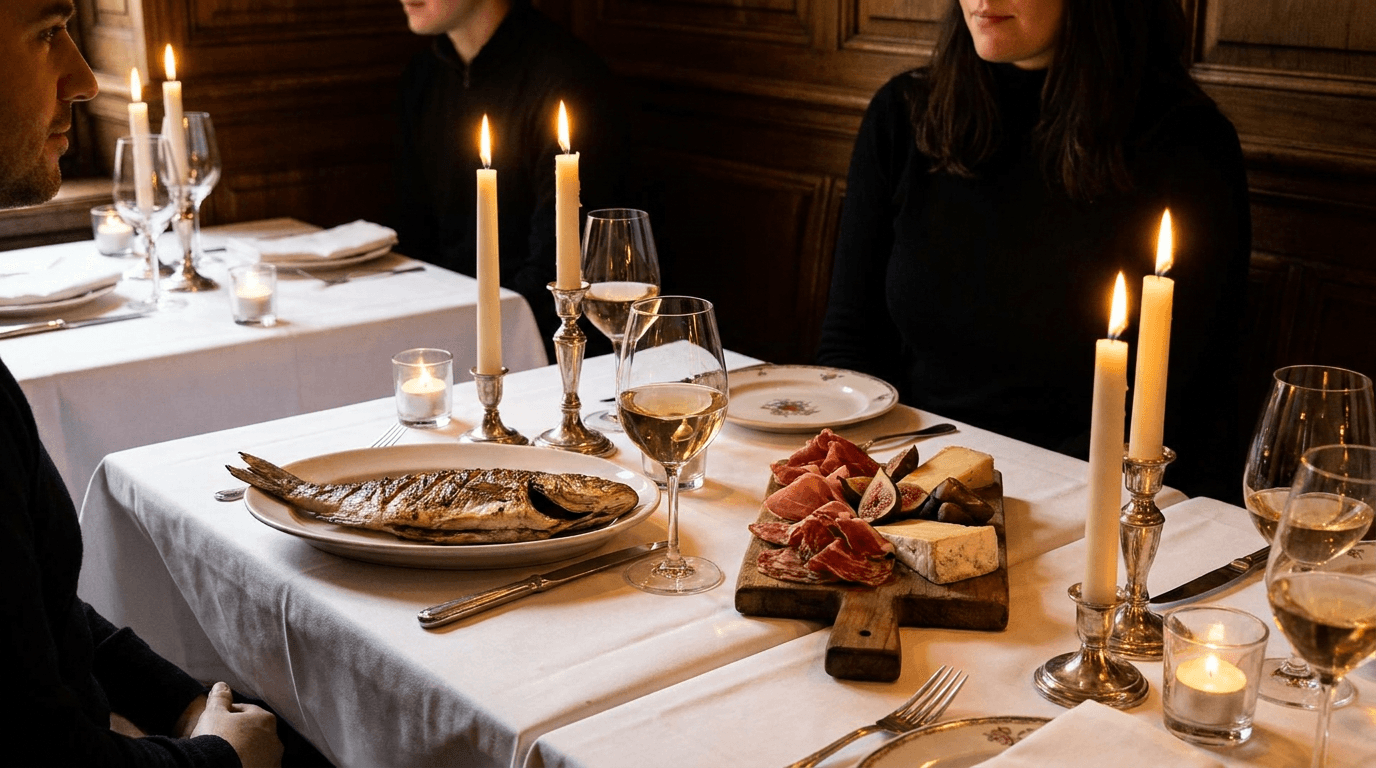
Fish with white wine, always. This is the most deeply ingrained reflex — and the most frequently botched. A grilled sea bass with lemon butter and Muscadet? Flawless. But seared tuna with soy glaze and that same Muscadet? Disaster. The wine collapses, the dish bulldozes it, no harmony exists. The mistake: ignoring the power of the fish and its accompaniment. A tuna steak, swordfish, or glazed salmon can absolutely handle a light red — a Burgundy Pinot Noir, a Jura Trousseau, or a chilled Beaujolais. The fix: forget the protein, focus on the sauce and cooking method. Smoked, grilled, or heavily sauced fish often demands more body than a delicate white can provide.
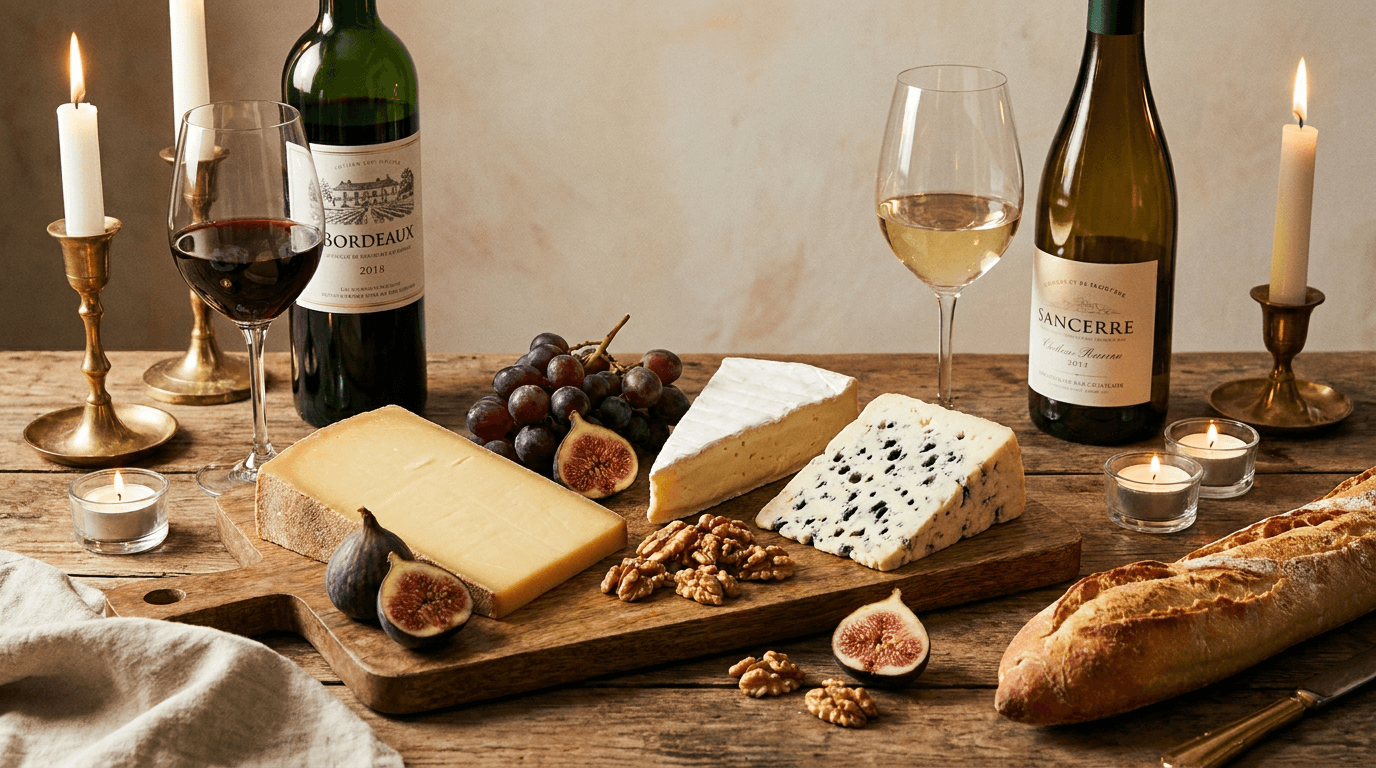
Cheese with tannic red wine. This is the great French table classic, and it's a gustatory disaster in 80% of cases. Tannins react with the fat in cheese and produce a metallic, bitter, unpleasant sensation. A ripe Camembert with a young Cahors? Honestly inedible. The fix: white wine is king on the cheese board. Aged Comté with Vin Jaune from the Jura. Fresh goat cheese with Sancerre. Roquefort with Maury or Banyuls. Try it once and you'll never go back. Cheese and white wine is the revelation nobody wants to hear.
Mistakes #3 and #4: Foie Gras Drowned in Sugar and Chocolate Dessert Abandoned
Foie gras with an overpowering, ice-cold Sauternes. The pairing is legitimate on paper, but the execution is almost always wrong. Out comes a Sauternes at 6°C, loaded with residual sugar, slammed onto an already rich and unctuous mi-cuit foie gras. Result: a bomb of fat and sugar that numbs the palate by the second bite. The fix: serve your Sauternes at 11-12°C, never below. Or better yet: dare a dry, aromatic white. An Alsatian Pinot Gris, a dry Jurançon, or even an Extra-Brut Blanc de Blancs Champagne. The acidity cuts through the fat, the palate stays alive, and every bite becomes a distinct pleasure. Fat-on-fat is a gustatory dead end.
Chocolate dessert with no wine at all. We abandon wine at dessert, especially with chocolate. Big mistake. Dark chocolate, with its bitterness and complexity, is an extraordinary playground for fortified sweet wines. The fix: Banyuls Grand Cru on a dark chocolate fondant (70% cacao). Maury on a chocolate lava cake. Amber Rivesaltes on a ganache. The key: the wine must match or exceed the chocolate's intensity. Forget dry reds — they'll be devoured by cacao bitterness. Fortified wines, with their concentration and controlled sweetness, embrace chocolate like nothing else can.
Mistake #5: Red Meat with an Overpowered Red — The Escalation Trap
A grilled ribeye with a massive Châteauneuf-du-Pape at 15% ABV. It seems logical: powerful meat, powerful wine. But it's the escalation trap. After two glasses, you're flattened. Massive tannins dry out the mouth instead of refreshing it. The meat loses all subtlety. Alcohol dominates everything. It's no longer a pairing — it's a fight.
The fundamental mistake: confusing power with intensity. A high-alcohol wine isn't necessarily flavor-intense. And red meat doesn't need to be dominated by the wine — it needs to be accompanied.
The fix: dial down the power, dial up the freshness. A Loire Chinon on a ribeye. A well-crafted Fronsac. A Crozes-Hermitage from a winemaker who chases elegance over maximum extraction. On grilled lamb, an Irouléguy red or a new-generation Madiran, vinified gently, will work wonders. The secret to a great red meat pairing is a wine with enough tannic structure to stand up to the fat, but enough freshness to cleanse the palate between every bite. Look for winemakers who work with finesse — on Spiravel, you'll find them selling direct, with the guarantee of wines crafted for the table, not for a critic's score.
Frequently Asked Questions
Should you always pair wine with the main protein?
No. Pair wine with the dominant element on the plate: the sauce, garnish, or cooking method often matters more than the protein itself. Roast chicken and chicken curry demand entirely different wines. Think in terms of intensity, acidity, and texture rather than simplistic meat-versus-fish categories.
Is rosé a good all-purpose pairing wine?
Quality rosé is a seriously underrated ally. A structured Provence rosé works beautifully with grills, Mediterranean cuisine, or charcuterie boards. But avoid overly light rosés with powerful dishes — they'll be crushed. Choose a vinous rosé, carefully made, from grapes like Mourvèdre or Tibouren for real pairing versatility.
How can you tell if a pairing works before serving?
Test the pairing in the kitchen. Take a bite of the dish, then a sip of wine. If the wine tastes better after the food and the food tastes better after the wine, the pairing works. If one dominates or an unpleasant bitterness appears, switch wines. Cross-tasting remains the only reliable method.