The Fundamental Principles of Food and Wine Pairings
Pairing a wine with a dish is not an exact science, but there are rules that, once mastered, make the exercise almost intuitive. Three fundamental principles guide professional sommeliers.
1. Regional pairing — Nature has done things well: wines and culinary specialties from the same terroir naturally complement each other. Munster and Gewurztraminer from Alsace, bœuf bourguignon and Pinot Noir from Côte d'Or, seafood and Muscadet sur lie from Loire — centuries of practice have forged these marriages.
2. Texture pairing — Unite similar or complementary textures. A rich wine (oaked Chardonnay, sweet wine) balances a rich dish (cream, butter, foie gras). A crisp, mineral wine (Chablis, Sancerre) cuts through the fat of noble fish and cleanses the palate.
3. Intensity pairing — A light wine gets lost against a powerful dish, and a great red overwhelms a sole meunière. The rule: match the intensities. Game in sauce calls for a Châteauneuf-du-Pape or a Bandol rouge; a spring salad calls for a light rosé from Provence.
White Wines: Which Dishes Suit Them?
White wine is often underestimated at the table. Its versatility extends far beyond starters and fish.
Fish and Seafood
This is the most classic pairing, and for good reason. The acidity of white wine cuts through the fat of fish and highlights the iodine notes of shellfish.
- Oysters, shellfish → Muscadet sur lie, Chablis, Picpoul de Pinet (bright acidity, minerality)
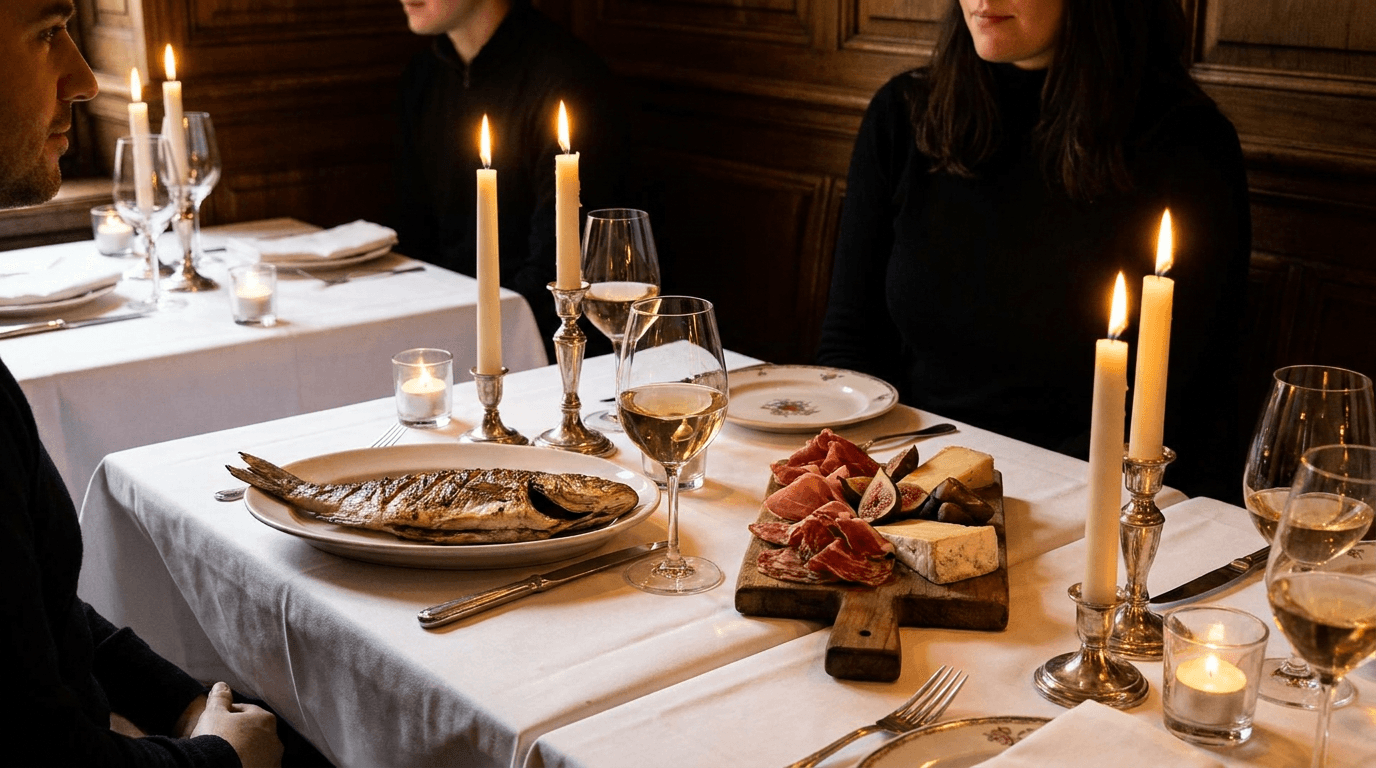
- Grilled fish → Sancerre, Pouilly-Fumé, Vermentino de Corse
- Fish in creamy sauce → Meursault, Mâcon-Villages, Saint-Véran (rich Chardonnay)
- Sushi, sashimi → Champagne brut, Riesling d'Alsace (acidity and complexity)
Poultry and White Meats
- Roast chicken → Bourgogne blanc, Viognier (Condrieu if budget allows)
- Veal in cream sauce → Chardonnay de Bourgogne, Roussette de Savoie
- Foie gras → Sauternes, Monbazillac, Gewurztraminer Vendanges Tardives (sweet-fat pairing)
Cheeses
Contrary to popular belief, white is often better than red with cheese.
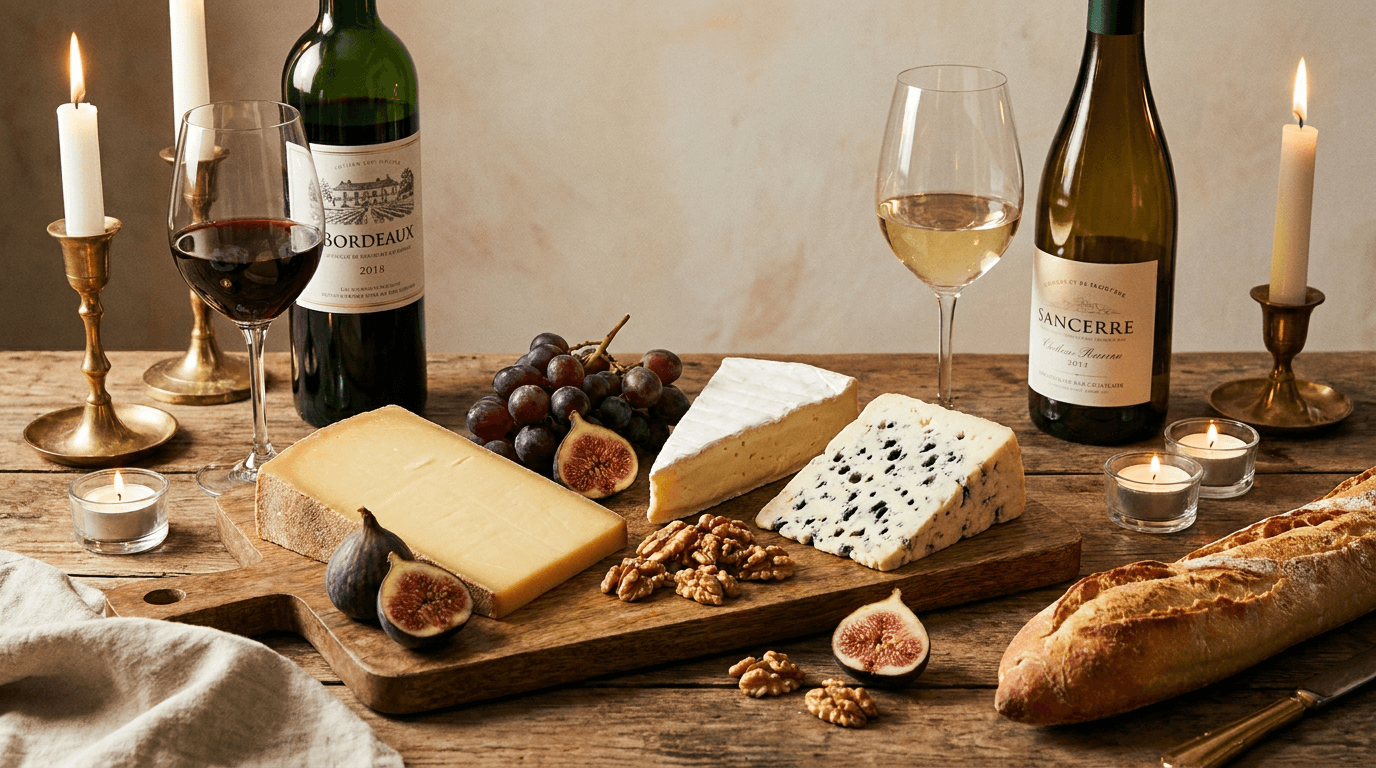
- Fresh goat cheese → Sancerre, Pouilly-Fumé, Menetou-Salon (the Loire marriage)
- Brie, Camembert → Champagne brut, Chablis
- Comté, Beaufort → Vin jaune du Jura, Chardonnay de Bourgogne
- Roquefort → Sauternes, Rivesaltes ambré (sweet against salt)
Key Grape Varieties to Remember
| Grape Variety | Style | Ideal with |
|---|---|---|
| Chardonnay | Rich, honeyed or mineral depending on terroir | Fish in sauce, poultry, hard cheeses |
| Sauvignon Blanc | Crisp, herbaceous, fruity | Goat cheese, seafood, salads |
| Riesling | Taut, petrol notes, mineral | Choucroute, noble fish, Asian cuisine |
| Viognier | Floral, apricot, generous | Spiced poultry, mild curry, oily fish |
Red Wines: The Great Pairing Classics
Red is not universal. Its tannins can clash with certain dishes — learn to use it with precision.
Red Meats
This is the natural playground for reds of character.
- Rib steak, côte de bœuf → Bordeaux (Médoc, Saint-Émilion), Cahors, Madiran
- Leg of lamb → Pauillac (regional pairing), Côte-Rôtie, Saint-Estèphe
- Beef in sauce → Bourgogne rouge (Pinot Noir), Crozes-Hermitage
- Duck, magret → Pomerol, Fronton, Gaillac rouge
Game and Slow-Cooked Dishes
- Feathered game (pheasant, partridge) → Gevrey-Chambertin, Bandol rouge, Cornas
- Furred game (deer, wild boar) → Châteauneuf-du-Pape, Pomerol, great Northern Rhône wines
- Cassoulet, daube → Minervois, Corbières, Fitou (Languedoc wines for Languedoc dishes)
Cheeses (Special Cases)
With aged and strong cheeses, tannic red is often a poor choice.
- Époisses, Maroilles → Light Pinot Noir (Bourgogne village), never a powerful red
- Cantal, Saint-Nectaire → Côtes d'Auvergne, supple Merlot
The classic mistake to avoid: serving a tannic Bordeaux with soft-rind cheeses. The tannins accumulate on the cheese fat and leave a metallic aftertaste. Prefer white in almost all cases.
Key Grape Varieties
| Grape Variety | Style | Ideal with |
|---|---|---|
| Cabernet Sauvignon | Tannic, structured, blackcurrant | Lamb, aged beef, game |
| Pinot Noir | Fine, silky, strawberry-cherry | Poultry, mushrooms, mild cheeses |
| Syrah | Peppery, intense, black olive | Grilled lamb, charcuterie, stew |
| Grenache | Warm, ripe red fruits | Meats in sauce, tagine, pizza |
Champagne and Bubbles: Much More Than an Apéritif
Champagne suffers from a misconception: it is not reserved for midnight toasts and festive apéritifs. It is one of the most gastronomic wines in France.
Throughout the Meal
- As an apéritif → Champagne brut non-vintage, Crémant d'Alsace, Prosecco
- Light starters (tartare, carpaccio) → Blanc de blancs (100% Chardonnay) — tension and minerality
- Seafood, lobster → Blanc de noirs (Pinot Noir dominant) — amplitude and roundness
- Noble fish (sole, turbot, sea bass) → Vintage Champagne — complexity to match the dish
- Lightly sweet desserts (fruit tart, sorbet) → Champagne demi-sec — sweet/sweet pairing without heaviness
The Unexpected Pairing: Champagne and Fried Food
A starred sommelier pairing: the bubbles and acidity of Champagne perfectly cut through the fat of fried fish or fish & chips. Try it.
Regional Pairings: Terroir on the Plate
French gastronomy was built alongside its wines. These historical pairings are the safest bets.
| Region | Dish | Wine |
|---|---|---|
| Bordeaux | Pauillac leg of lamb | Pauillac rouge (Cabernet Sauvignon) |
| Bourgogne | Bœuf bourguignon | Gevrey-Chambertin or Nuits-Saint-Georges |
| Alsace | Choucroute garnie | Riesling d'Alsace (dry and taut) |
| Loire | Goat cheese (Crottin, Valençay) | Sancerre or Menetou-Salon |
| Provence | Ratatouille, grilled meats | Côtes de Provence rosé or Bandol rouge |
| Rhône | Daube provençale, tapenade | Châteauneuf-du-Pape or Côtes-du-Rhône |
| Languedoc | Cassoulet | Minervois, Fitou, Corbières |
| Jura | Comté, chicken in cream sauce | Vin jaune de Château-Chalon |
Why Terroir Works
Calcarite soil → acidic wines → rich regional cuisines (cream, butter, lard). Volcanic soil → mineral wines → iodine-rich products and coastal fish. Regional pairings are no coincidence: they are the product of centuries of shared gastronomy.
Our Spiravel Domain Recommendations for Every Pairing
Knowing the rules of pairings is one thing. Finding the right wine — produced by a winemaker who tells you about their work, at a fair price — is another.
On Spiravel, each producer profile specifies the style of their cuvées, the grape varieties used, the winemaking method, and pairings suggested directly by the winemaker. No more intermediaries needed to find the right wine at the right price.