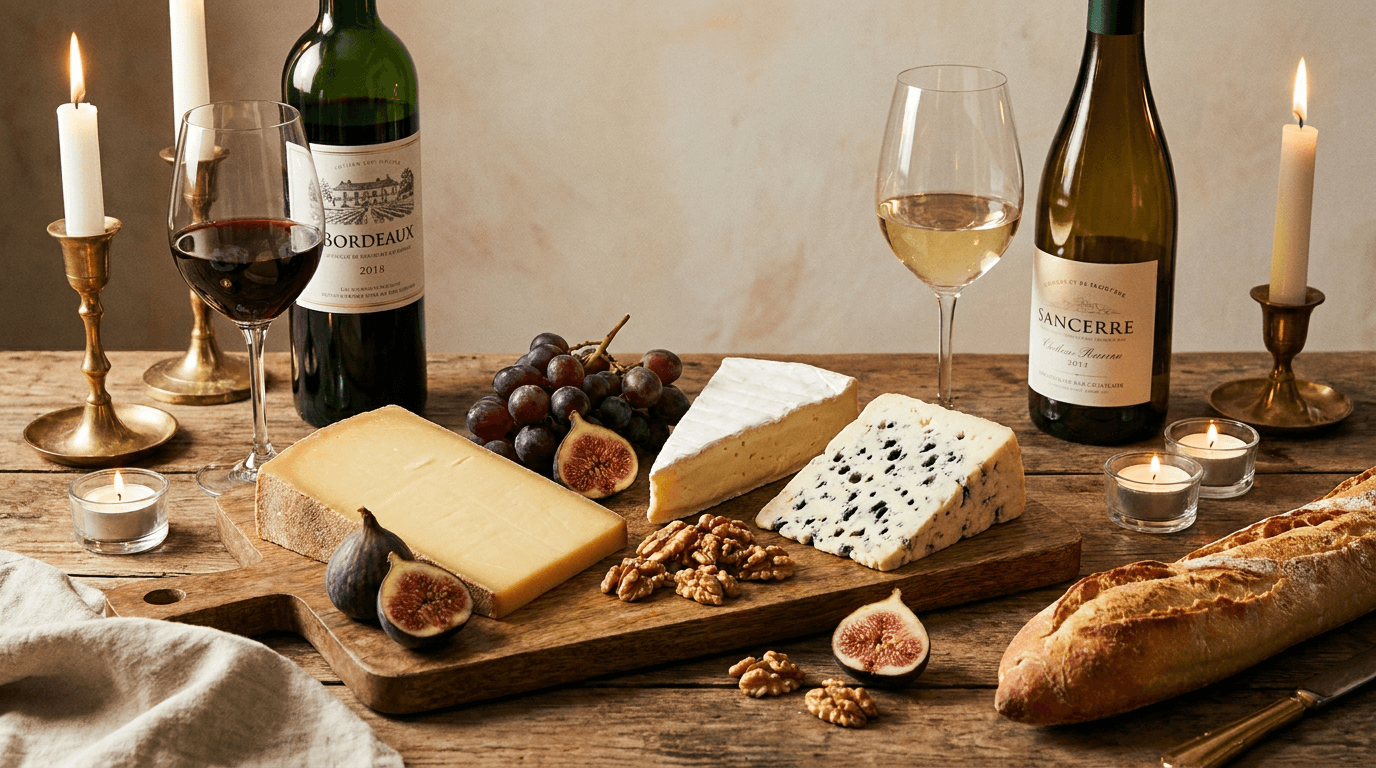
Wine and cheese pairings: the complete guide to getting it right
Wine and cheese: a centuries-old pairing that nevertheless hides a few pitfalls. Contrary to popular belief, the best companion for cheese is almost never a full-bodied, tannic red wine — it is usually a white. Here are the pairings that really work, explained without the jargon.
The art of wine and cheese pairings
The tannins in red wine clash with the fats and proteins in cheese, which can leave a bitter, almost metallic taste in the mouth. A lively, more acidic white wine generally balances the fat and saltiness much better. That doesn’t mean red is off the menu: you simply need to choose one that is light and low in tannins.
The golden rule: pair by region
Nature works in wonderful ways: wines and cheeses from the same region generally pair very well together. Same terroir, same climate, same cultivation — they complement each other naturally on the plate.
Perfect regional pairings
| Cheese | Wine | Why |
|---|---|---|
| Comté | Vin jaune from the Jura | Same terroir, oxidative character that complements each other |
| Chèvre de Loire | Sancerre or Pouilly-Fumé | Sauvignon and goat’s cheese, a classic pairing |
| Munster | Gewurztraminer from Alsace | Power against power |
| Roquefort | Sauternes | Sweetness against salt and richness |
Soft cheeses with a bloomy rind
Brie, Camembert, Coulommiers
The main aim is to cleanse the palate and cut through the richness. A brut Champagne fulfils this role perfectly: its bubbles refresh the mouth and its acidity counterbalances the fat content. A white Burgundy — Chablis or Mâcon — also works wonders thanks to the minerality of the Chardonnay. With a very mature Camembert, a dry cider can even be a pleasant surprise. On the other hand, it is best to avoid tannic reds, which leave a bitter aftertaste with this type of cheese.
Blue-veined cheeses
Roquefort, Bleu d’Auvergne, Fourme d’Ambert
Rule number one: sugar versus salt. The wine’s sweetness envelops the cheese’s salty and tangy intensity. Sauternes remains the most famous pairing, closely followed by the more accessible Monbazillac. For those who want to venture off the beaten track, a Vintage Port offers a bold alternative, and Rivesaltes Ambré — little-known but excellent — is well worth discovering.
Hard-pressed cooked cheeses
Comté, Gruyère, Beaufort
These cheeses are among the most versatile. They pair very well with a Burgundy Chardonnay or a vin jaune, which bring out their aromatic richness. This is also one of the rare occasions when a red wine works perfectly, provided you choose a light one: a Pinot Noir or a Trousseau du Jura, which are delicate and low in tannins, pair beautifully with these cheeses without overpowering them.
Practical tips
- Serve the cheeses at room temperature — the cold dulls their aromas
- Start with the mildest cheeses and finish with the strongest
- As a general rule, white wine with cheese — but light, low-tannin reds make excellent exceptions
Frequently asked questions
Does red wine go with all cheeses? No. Tannic reds clash with the richness of most cheeses, particularly soft cheeses. Only light reds such as Pinot Noir work well, especially with hard, pressed cheeses.
What is the best pairing for Roquefort? Sauternes, a sweet white wine whose sugar balances the salt and piquancy of the cheese. Monbazillac is an excellent, more affordable alternative.
Which wine should I choose if I don’t know what cheese will be served? A dry, crisp white — such as a Loire Sauvignon or a Burgundy Chardonnay — remains the safest bet to complement a varied cheese platter.