What is natural wine?
Natural wine is produced using methods that prioritise minimal intervention in the vineyard and in the cellar.
The key principles
- Zero or almost zero added sulphur: sulphur is the main preservative in wine. Natural winemakers limit it to the bare minimum, or even eliminate it entirely.
- Indigenous yeasts: rather than using laboratory-selected yeasts, winemakers rely on the yeasts naturally present on the grape skins.
- No additives in the cellar: no chaptalisation, no acidification, no oak chips.
How to recognise a natural wine on the shelf?
Existing labels
The term "natural wine" is not regulated in France. However, a few associations offer strict specifications:
- Nature & Progrès: one of the oldest and most demanding
- Vin Méthode Nature: a label created in 2020, the only one officially recognised
- S.A.I.N.S: Sans Aucun Intrant Ni Sulfite (No Additives or Sulphites)
Organoleptic characteristics
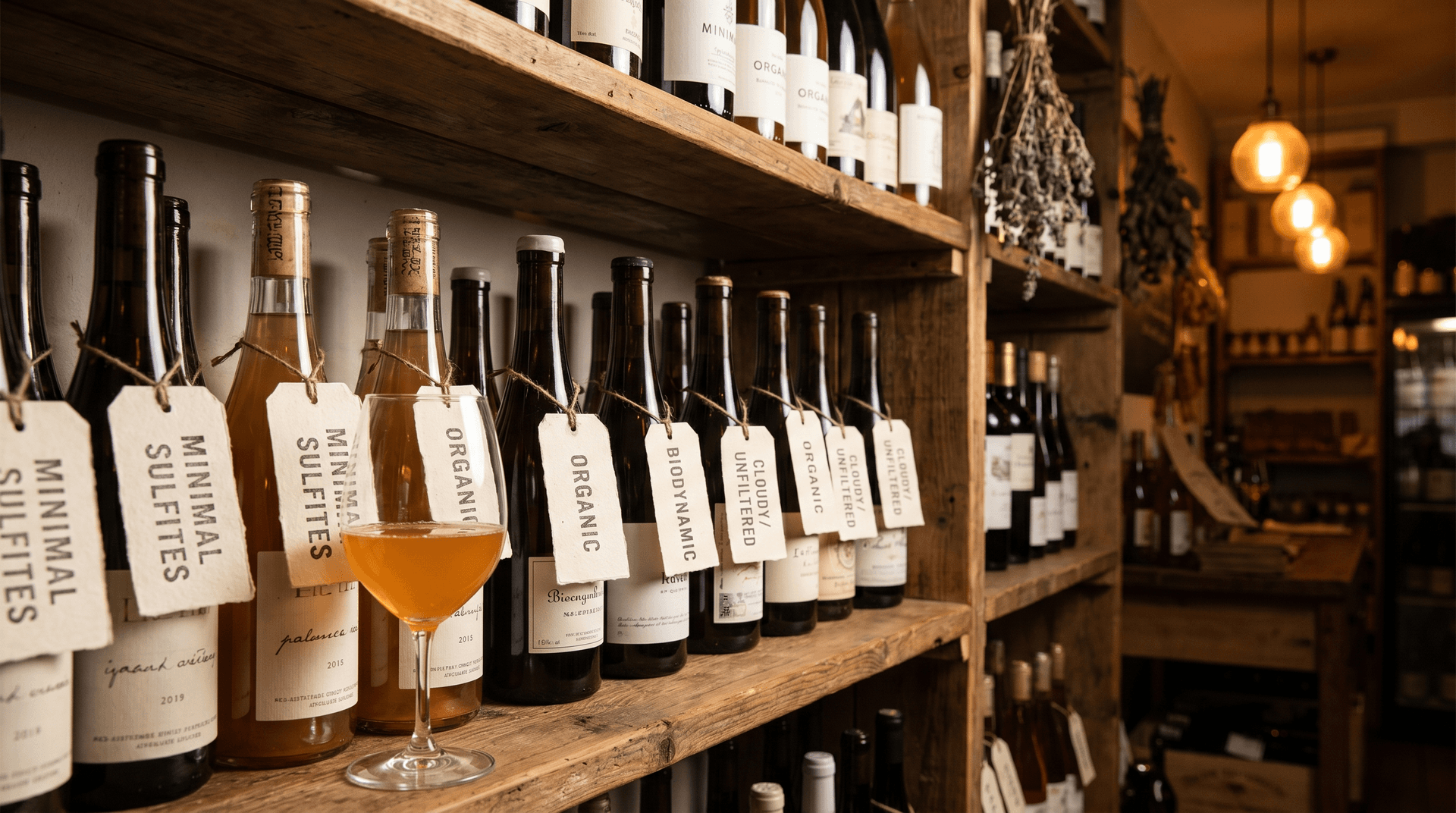
A natural wine may be slightly cloudy (this is normal, as it is unfiltered) and may have unusual aromas: notes of cider, kombucha or fermentation.
Practical tips for beginners
- Start with a trusted winemaker: ask your wine merchant for advice
- Try white and orange wines: often more accessible
- Embrace the variability: each bottle may differ slightly from the last
- Keep them cool: ideally between 12 and 14°C
Natural wine is, above all, a production philosophy. The key is to find winemakers whose work resonates with you.