Three approaches, three philosophies
Responsible" wine actually covers very different realities. Understanding these distinctions is the key to making informed choices and engaging in dialogue with winemakers.
Organic Farming (AB)
What it is
Organic farming is regulated by the European Union (EC Regulation no. 834/2007). It is the only legally regulated term among the three.
What is prohibited
- Synthetic pesticides
- Chemical herbicides
- Synthetic fertilisers
- GMOS
What is authorised
- Sulphur (in limited quantities)
- Copper (to combat mildew)
- Yeasts selected in the cellar
Figures
In France, over 15% of vineyards are certified organic - one of the highest rates in the world.
Biodynamics
What it is
Biodynamics goes beyond organic farming. It is based on the work of Rudolf Steiner (1924) and considers the estate as a living organism in relation to cosmic cycles.
Specific practices
- Biodynamic preparations (500, 501...): preparations based on cow dung, silica, medicinal plants, etc
- Lunar calendar: work in the vineyard and cellar follows the "fruit", "flower", "root" or "leaf" days
- Plant homeopathy: infinitesimal doses to activate vital processes
Certifications
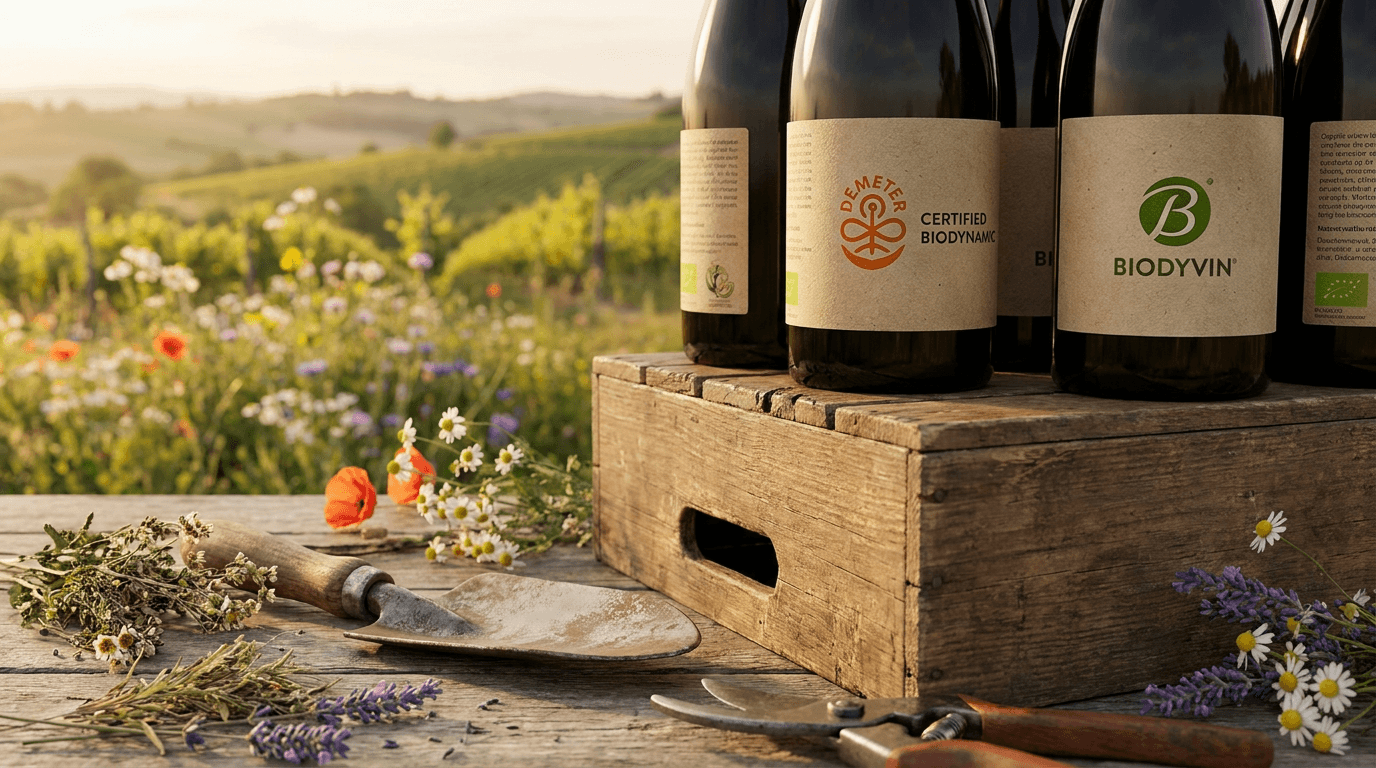
- Demeter: the most widely recognised worldwide
- Biodyvin: specific to wines, more widespread in France
Natural Wine
What it is
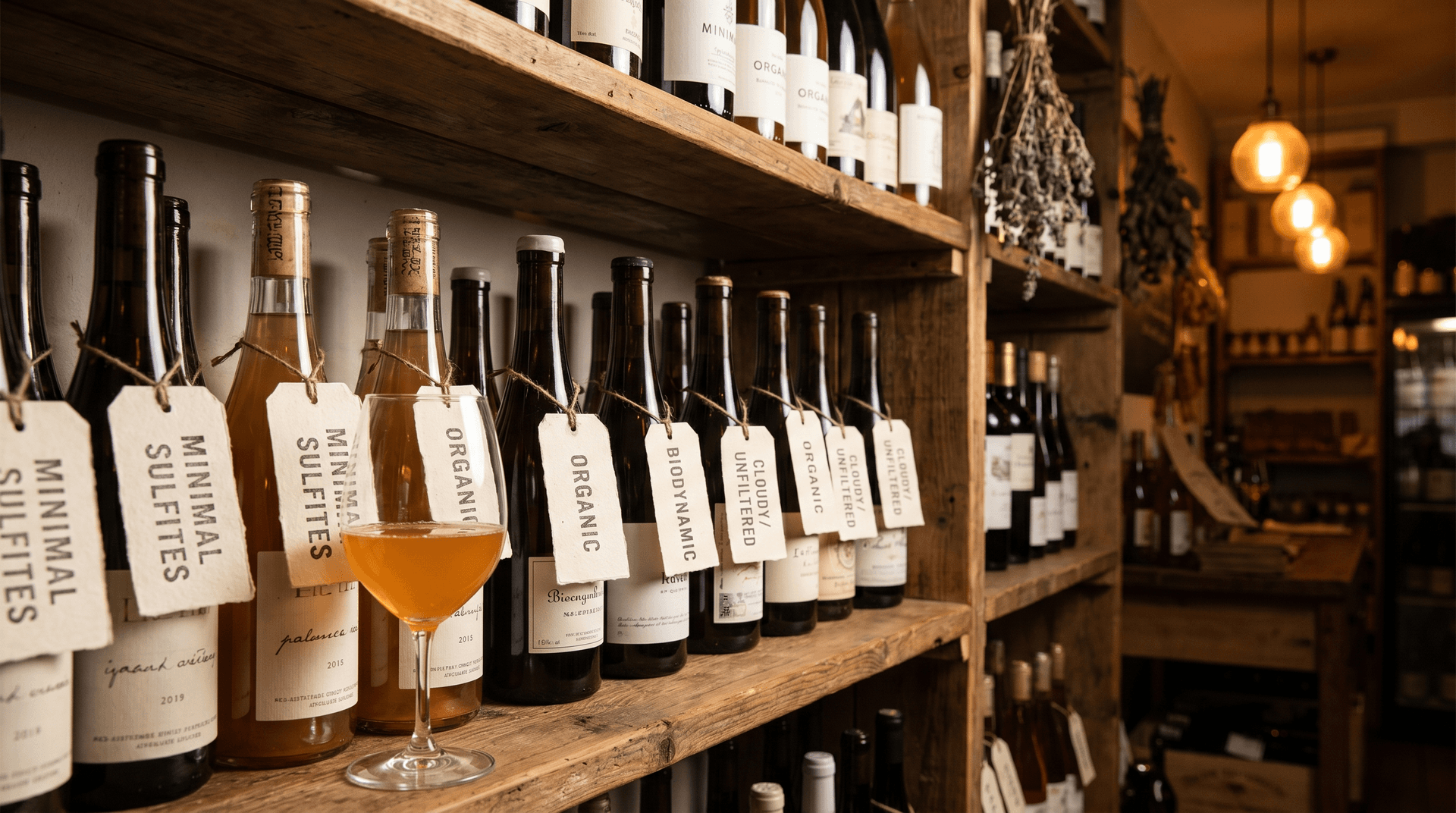
Natural wine has no official regulatory framework in France (apart from the "Méthode Nature" label created in 2020). Above all, it's a philosophy: intervene as little as possible.
Common principles
- Organic or biodynamic viticulture (most often)
- Spontaneous fermentation (indigenous yeasts)
- No or very little added sulphur
- No additives in the cellar
Comparative table
| Criteria | Organic | Biodynamic | Natural |
|---|---|---|---|
| Official (EU) | Private (Demeter) | None | Sulphur |
| Sulphur | Limited | Very limited | Zero or trace |
| Selected yeasts | Authorised | Disadvised | Prohibited |
| Lunar calendar | No | Yes | Variable |
Conclusion
These approaches are complementary. Many natural winegrowers are certified organic and practise biodynamics. The key is to understand the winemaker's approach rather than relying solely on a logo.