Why learn the vocabulary of the winegrower?
The language of wine is a code shared between producers and enlightened wine lovers. When a winemaker tells you about his carbonic maceration or his 18-month barrel ageing, he's not trying to impress you - he's describing with precision the technical choices that shape the taste of his bottle.
Understanding these terms fundamentally changes the buying and tasting experience. You can read a technical sheet, talk to a producer during a visit, and above all choose a wine that really matches what you like. This 40-word glossary gives you the keys to entering this world.
Vineyard and terroir terms
Terroir - A central and untranslatable concept, terroir refers to all the natural factors of a place: soil, subsoil, relief, exposure, microclimate. Two plots 50 metres apart can produce radically different wines thanks to their terroir.
Terrace - A sloping plot of land laid out in tiers to retain the soil and allow mechanised work. Very common in the northern Rhône (Côte-Rôtie, Hermitage) and in Alsace.
Coteau - Hillside planted with vines. The slopes benefit from favourable exposure and natural drainage.
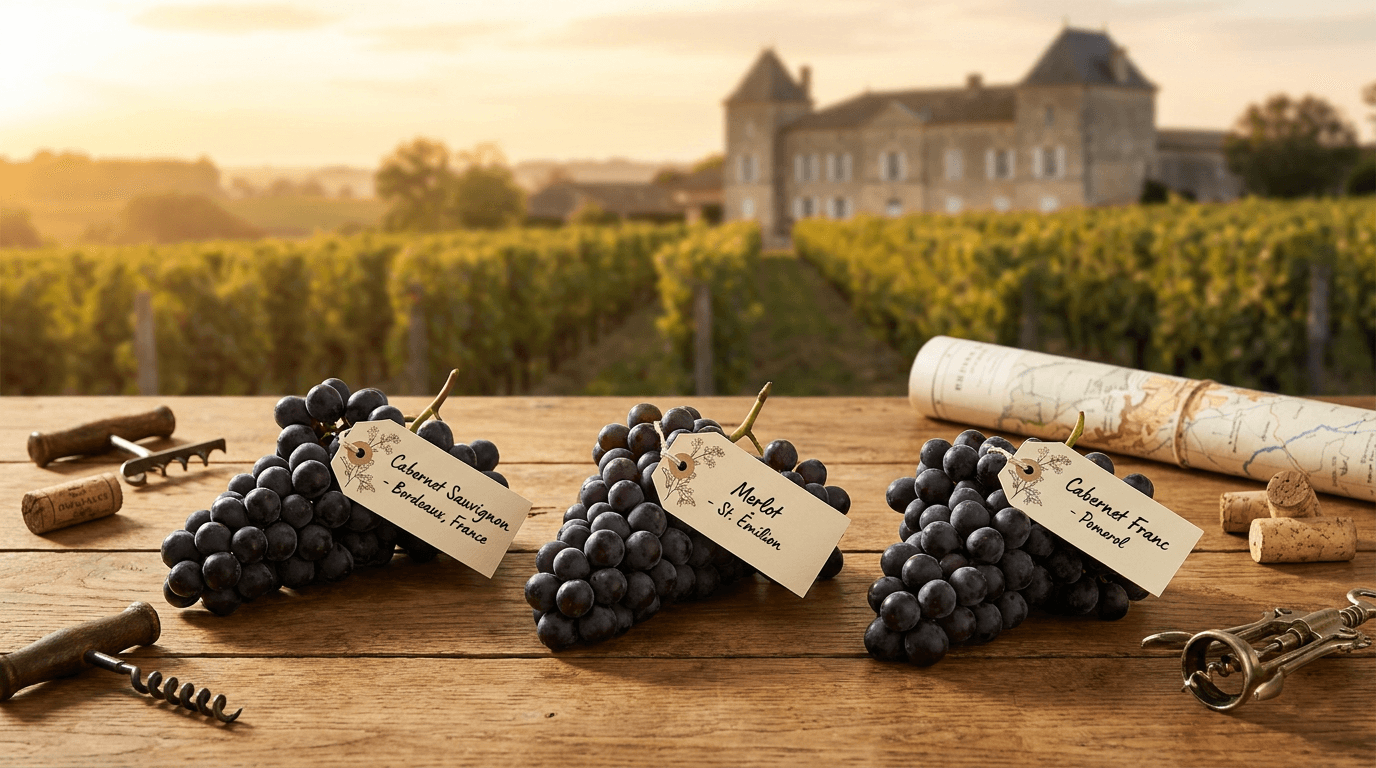
Grape variety - Variety of vine. Cabernet Sauvignon, Pinot Noir, Chardonnay and Sauvignon Blanc are grape varieties. There are several hundred of them in France, with around fifty dominating production.
Rootstock - Since the phylloxera epidemic in the 19th century, European vines have been grafted onto the roots of naturally resistant American vines. The rootstock influences the vigour and longevity of the plant.
Yield - Quantity of grapes produced per hectare of vineyard, expressed in hectolitres/hectare (hl/ha). A low yield (25 hl/ha in Bourgogne Grand Cru) concentrates the aromas; a high yield dilutes the wine.
Harvest - Harvesting of the grapes. It can be manual (sorted bunch by bunch, respecting the fruit) or mechanical (efficient but less selective). The date of harvest has a profound influence on the profile of the wine.
Viticulture raisonnée - An approach that reduces the use of chemical inputs without achieving organic certification. Each intervention is justified by agronomic necessity.
Organic farming (AB) - European regulations that ban synthetic pesticides, herbicides and chemical fertilisers. Over 15% of French vineyards are certified AB.
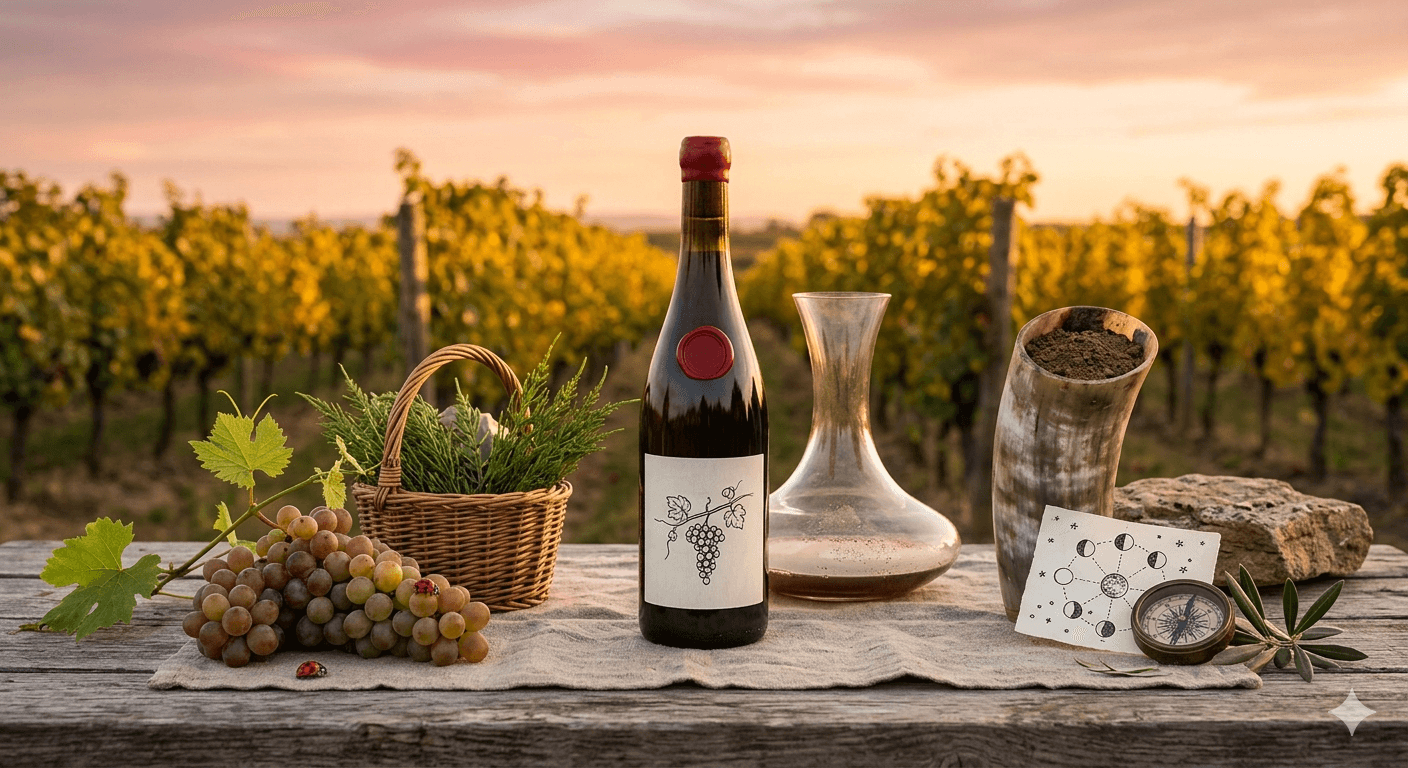
Biodynamic - An approach that goes beyond organic: lunar calendar, biodynamic preparations (dynamised cow dung, herbal teas), holistic vision of the estate as a living organism. Demeter and Biodyvin certifications.
Winemaking terms
Maceration - Prolonged contact between the juice and the grape skins. It extracts colour, tannins and aromas. For red wines, it lasts from a few days to several weeks. For whites, it is kept to a minimum or not carried out at all.
Carbonic maceration - Typical Beaujolais technique: whole bunches ferment anaerobically inside the grapes. The result is fruity, supple wines that should be drunk young.
Alcoholic fermentation - Transformation of grape sugars into alcohol by yeasts. It generally lasts 1 to 3 weeks. The temperature is carefully controlled: cool to preserve the fruity aromas, warmer to extract the tannins.
Malolactic fermentation (MLF) - Transformation of malic acid (acidic and aggressive) into lactic acid (milder, creamier) by bacteria. Quasi-systematic for red wines; optional for white wines (it "rounds off" Chardonnay from Burgundy).
Maturation - The phase of maturing the wine after fermentation. It lasts from a few months to several years. It is during this period that the wine stabilises and develops its complexity.
Oak barrel - Wooden container used for ageing. Brings notes of vanilla, toast and cedar and supports the tannins. A new barrel leaves more of a mark on the wine than a barrel of one or more wines. Standard capacity: 225 litres (Bordeaux barrel), 228 litres (Burgundy barrel).
Stainless steel vat - An alternative to barrels, this preserves the wine's freshness and primary aromas without adding wood. Ideal for lively whites (Muscadet, Sancerre, Alsace).
Soutirage - Transferring wine from one container to another to separate it from its lees (deposits). Clarifies the wine gradually.
Ageing on lees - The wine remains in contact with its fermentation lees. Adds roundness, texture and a slight creaminess. Classic Muscadet technique on lees.
Collage - Addition of a natural protein (egg white, bentonite, gelatine) which binds to the particles in suspension and causes them to fall. Vegan wines use plant-based alternatives.
Filtration - Passing wine through a filter to clarify it. Natural winemakers often forego this process to preserve aromas and complexity.
Assemblage - Blending several wines from different grape varieties, plots or vintages. A major art in Bordeaux and Champagne.
Tasting terms
Robe - The colour and visual appearance of a wine. A red may have a garnet, ruby, purple or tile colour (a sign of evolution). A white ranges from pale greenish to deep golden.
Nose - All the aromas perceived by olfaction. The first nose (without swirling) reveals the most volatile aromas; the second nose (after swirling the glass) opens up the deeper aromas.
Attack - The first sensation in the mouth when the wine touches the palate. It can be frank, supple, lively, fatty or tense.
Tannins - Polyphenols extracted from the skins, pips and stalks of the grape (but also from the wood in barrels). They create a sensation of astringency and dryness on the palate. Fundamental to the structure of long-keeping red wines.
Length on the palate (or persistence) - The length of time the aromas persist after swallowing the wine. It is measured in caudalies (1 caudalie = 1 second). A great wine can exceed 10 to 15 caudalies.
Retro-olfaction - Perception of aromas via the retronasal route, i.e. through the back of the palate to the nasal cavities, after swallowing the wine. Often reveals the most complex aromas.
Final - All the sensations that persist after swallowing. A good finish is long, clean and harmonious. A short or bitter finish is often a sign of imbalance.
Balance - Harmony between the constituent elements of a wine: acidity, sugar, alcohol and tannins. A balanced wine does not allow any one of these elements to dominate.
Complexity - The ability of a wine to reveal several successive layers of aromas, evolving with the glass and the meal. Complexity develops with time and the quality of the terroir.
Appellations and classifications
AOC / AOP - Appellation d'Origine Contrôlée (French term) or Appellation d'Origine Protégée (European term). Guarantees that a wine is produced in a defined area, with precisely defined grape varieties, yields and methods.
IGP (Protected Geographical Indication) - Less strict geographical protection than AOC. Allows more grape varieties and higher yields. The former Vins de Pays (Pays d'Oc, Val de Loire, etc.) are covered by the PGI.
Vin de France - A designation with no geographical indication or grape variety restrictions. Frees winegrowers from AOC specifications. Popular with natural winemakers who want to experiment.
Premier Cru - In Burgundy, this refers to a classified parcel (between village and Grand Cru) with recognised superior characteristics. In Bordeaux, the term is used to classify châteaux according to their historical reputation.
Grand Cru - The highest level of classification. In Burgundy, 33 red parcels (Chambertin, Musigny, etc.) and 8 white parcels (Montrachet, Corton-Charlemagne, etc.) bear this title. In Alsace, 51 parcels are classified as Grand Cru.
Vintage - The year in which the grapes are harvested. A great vintage (ideal sunshine, perfect ripeness) can transform a good wine into an exceptional one. Conversely, a difficult vintage puts the winemaker's talent to the test.
Cuvée - A particular blend, often the most accomplished selection from an estate. The term can also refer simply to a specific production (cuvée Prestige, cuvée Vieilles Vignes).
Domaine - A winegrowing estate that vinifies its own grapes. The term is well established in Burgundy.
Château - Bordeaux term for a wine estate, with or without an architectural château. There are several thousand in the Bordeaux region.
Cooperative cellar - Structure bringing together winegrowers who bring their grapes for collective vinification. It enables small producers to pool their equipment.
How to use this glossary to help you buy more effectively from Spiravel
The Spiravel producers' files use this vocabulary with care. Each winemaker describes his terroir, his winemaking methods and the organoleptic characteristics of his wines in his own language - the language he uses every day in his cellar.
Armed with this lexicon, you can read these sheets with fresh eyes: understand why a wine aged 18 months in new oak will be structured and woody, while a neighbour aged in stainless steel tanks will be lively and fruity. You can filter by type of viticulture (organic, biodynamic), by region, by tasting style.
[Discover the Spiravel estates and find the winemaker whose work really speaks to you.